Wednesday, 17 October 2012

Greater Hat-trick

On boxing day last year, me and Ewan did what most people do, and headed up to Peterhead, with a car full of bread and turkey scraps, to catch Gulls. Unfortunately our net did not fire as intended, and we only managed to catch three first winter Greater Black-backed Gulls.


However, our attempt was definitely worth the effort, as we soon discovered that T:007 (above) was sighted in St. Peter-Ording, Germany, only four days after ringing. It doesn't appear to have left since, as we've had sightings throughout the year in the same location from multiple observers, the most recent one being in mid-August.


Later in the year we got a report that another bird of the catch, T:006, had been seen in Hirtshals, Denmark on 26th June!  A photograph by the observer, Lars Pederson is below.


Amazingly that was not all!  Last month a sighting came through from the remaining gull of the catch, T:005, in Hanstholm, Denmark on 13th May.


So out of a catch of three birds, we've had a 100% foreign resighting rate! Not a bad boxing day after all! It really shows the benefits of colour rings on these species. All the locations the birds have been seen in are coastal harbour towns, so presumably the gulls have just latched onto and followed boats across the North Sea.


I will put an update up sometime soon about our Gull ringing this year.

Euan

Sunday, 14 October 2012

We like going to Phil's!


The last time we were in Phil's kitchen we ringed this Scaup, a first for GRG.


Then today, after a good mornings ringing of 150 finches, Phil called and asked us if we wanted to catch another finch.


We like going to Phil's!


Friday, 12 October 2012

Colour-ringed sightings in the North East


In addition to the many colour-ringing projects run by GRG, birds of other ringing groups have also been noted in the North East. The following are details of some colour-ringed birds seen this year.

On 11 September a Pale-bellied Brent with two white darvics was seen within a small flock of five on the Ythan. This bird had been ringed at Strangford Loch, NI on 17/10/2005 and during its travels had been recorded in France, Northern Ireland and the Republic of Ireland. This Brent was seen later in the month on the Solway Firth, presumably heading again for Ireland.

Colour-ringed Red Knot are not very common on the Ythan, so when one turned up on 17 August, it was interesting to receive news that it had been ringed at De Richel in The Netherlands way back on 27 July 2001. Also intriguing was the fact that this was the first sighting since ringing – perhaps giving hope for all those ringed birds you have never heard of since the ringing date.

A Black-tailed Godwit observed at the Ythan on 1 September was identified as being from Iceland. This Godwit was ringed at the nest on 1 July in NW Iceland.

On 18 September a Black-headed Gull was seen on the musselbeds of the Ythan. It had a white darvic and had been ringed in Rogaland, Norway on 8 April 2012 (see below map).


A Kittiwake at the mouth of the Ythan on 21 August had originally been ringed at Lowestoft Harbour on 27 June 2011. This is the second year when a similar bird has been seen in the same area.

Two Herring Gulls were seen on the cliffs north of the Bullers of Buchan. The first, on 13 March, had been ringed on 30 November 2007 at a landfill site near Scarborough, while the second, noted on 13 July originated from Pitsea landfill in Essex. It had been ringed on 27 March 2010 and was previously spotted in northern France (see below map).


Although many Forvie Sandwich Terns were fitted with rings and darvics and have dispersed, one “foreign” colour-ringed bird was seen among the “local” birds on 24 August and later at Cairbulg on 2 September. This young bird had been ringed in Zuid-Holland, The Netherlands on 19 June 2012.

MS

Friday, 5 October 2012

Our Cormorants off souff again

 Cormo colony: Trumps 7th green on his new golf course is a bit of a challenge.

Our cormorants are once again going their different ways for the winter. HXY is first off down souff again, reported back on Farmoor Reservoir in Oxfordshire by Paul Willis on 27/9/12 for its second winter and PJB passing through Northumberland for 2nd autumn, seen by Steve Holliday at Blyth Harbour on 4th October.

HXY in its first winter by Matt Prior 


Since the project began in 2003, thanks to the many observers who have reported darvic ringed birds, we have been able to build up a very interesting picture of the species winter movements and site fidelity. It’s fair to say our cormorant chicks make a generally southwards but otherwise fairly random dispersal in their first winter. However once settled down at a site for the winter, whether it be close to home, or on an inland water body in central England, or on the east or west coasts, or even further south into France or Portugal, they will then religiously return to this site winter after winter. 

Cormo FCX last 5 winters spent on Watermead Country Park, Leicestershire (photo by David Gray) and christened “JOCKY” by Steve Lister and David Gray

JOCKY” on eggs back at home by Chris Jones.

Thanks very much to all who have reported darviced cormorants over the years. It is hoped to send an updated history of “your” bird to you ASAP to let you know if it was seen back at a breeding colony in Aberdeenshire in 2012. Keep your eyes peeled again this winter please. 

Raymond Duncan


Monday, 23 April 2012

Neds Lintie conservation goes wrong and thanks to South Manchester RG


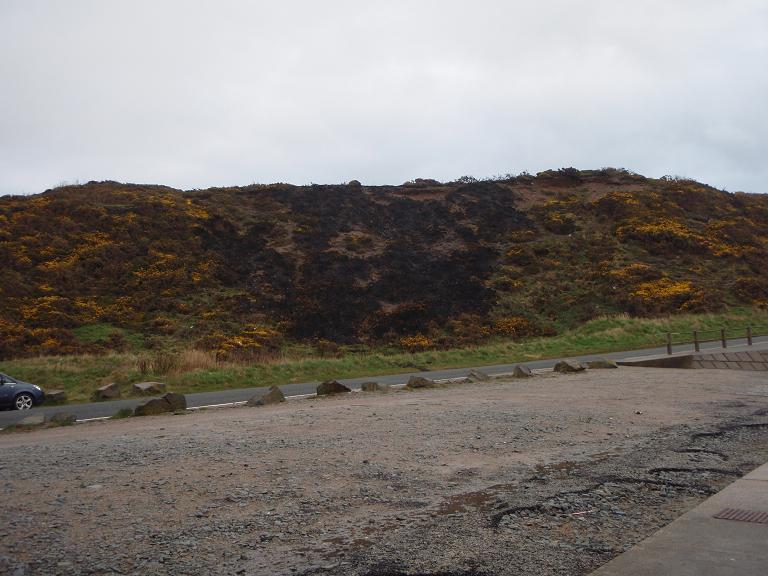
 Nice gorse bank, 11 known lintie nests and probably blackbird, song thrush and dunnock (well I’d like to see you cold search through that lot) last weekend. Well photo actually taken last April when we did get a sunny morning. 


This weekend 6 known lintie nests and prob the others mentioned all torched.
After no burns last summer we’d been complimenting the Neds on their controlled gorse burnings, creating new vigorous growth for the linties and keeping it in nice accessible, nestable patches. Grrrrr.


On the brighter side we’ve retrapped/resighted over 40 adult linnets and 20 chicks returning from last summer so with us well over the RAS quota we can take the rest of the summer off!


Finally a big thank you very much to South Manchester RG for information on one of our pied wag chicks from last summer which they controlled on 18/12/11 wintering in Mobberley, Chester. Here’s the very nest site (hole in wall) it was ringed in (2nd brood) and an adult (gnat in foreground) back last weekend, neither of the pair ringed unfortunately.
 

Raymond

Sunday, 25 March 2012

Recent Gull Sightings


The frustratingly mild winter we've has this year has meant that gulls haven't been very hungry, making catching them quite challenging. However, some interesting sightings have come from the birds we've managed to ring. We had good numbers of northern Argentatus Herring Gulls about at the beginning of the year. Distinctively pale plumaged first winter Herring Gull T:610 (above), which was ringed at Peterhead Harbour on 8th January, confirmed its Scandinavian roots when it was seen and photographed by Arnt Kvinnesland at Ferkingstad, Karmoy, Norway (below) on the 14th March.


The past few months we've also had lots of sightings from the Herring Gulls we ringed during the summer. Most of these have been around North East Scotland, but we've have had several birds travel further south, mostly to England, and recently one to Ouddorp in the Netherlands. A map of our long distance Herring Gull movements is below. We are now down to a 1 in 4 sighting
rate overall.


Glaucous Gull T:193, ringed last August at the Ugie Estuary, Peterhead (below with a satisfied Calum) which was then seen at Boldon Flats, Durham in Decemeber, has been sighted again several times across England.


It was seen at Newburn Sewer, Seaton Carew on 15th January, and then it went down to Cotham Landfill Site, Nottinghamshire for a couple of weeks from the 18th February (photographed below by Nick Crouch). It was next seen for a few days at Ogston Reservoir, Derbyshire from the 8th March. It then went north again, and was at Longnewton Reservoir, Cleveland on the 24th and 25th March.

It will be interesting to to see where it turns up next. Please look out for it and any other colour ringed gulls, send sightings to e.ferguson17@hotmail.co.uk. All our gulls have yellow rings with the letter T followed by a colon and three numbers.


A big thank you to all observers and photographers.

Euan

Wednesday, 7 March 2012

The Gentlemen's Ringing Group

Whilst trying to think where to take some of the more office-based staff from RSPB Aberdeen out to see some birds in the hand and a bit of ringing, the first place that came to my mind was the Gentlemen Ringers of Craibstone.


Alastair, Brian, Walter and others are well known for their good ringing, butteries and hot tea. And they made special efforts for us with jackets and ties! It wasn't just about how you fold a hankercheif though as we caught a few birds too, inlcuding this rather white-headed long tailed tit after we left.
Thanks to Ann for taking the photographs (although we were disappointed you weren't in a cocktail dress Ann!) and to all for putting on such a good ringing demo.


Jenny